In New York City, the retail landscape is unforgiving. Whether you are a luxury fashion label in SoHo, a diamond wholesaler in the Jewelry District, or a direct-to-consumer startup in DUMBO, your digital storefront is now more critical than your physical address.
For NYC businesses, the standard for online retail is exceptionally high. You aren’t just competing with local rivals; you are competing with global giants for the attention of the world’s most sophisticated consumers. This is why selecting the right Manhattan web design firm specializing in e-commerce sites is a strategic decision that directly impacts your bottom line.
At Manhattan Web Design, we understand that a high-performing e-commerce site sits at the intersection of beautiful design, psychological sales triggers, and flawless technical engineering.
Why NYC E-Commerce Demands a Specialized Agency
Standard web design is about information; e-commerce design is about transaction. The difference is profound. A generalist agency might build a beautiful brochure site, but they often lack the technical expertise to handle complex inventory management, dynamic pricing models, and high-volume traffic spikes.
The “Fifth Avenue” Standard
New York consumers expect a “Fifth Avenue” experience on their mobile screens. This means hyper-fast load times, intuitive navigation, and an aesthetic that conveys trust and luxury. According to data from the National Retail Federation, consumer expectations for seamless digital experiences have hit all-time highs, with friction at checkout being the number one cause of cart abandonment.
Critical Features of a High-Conversion E-Commerce Build
When vetting Manhattan web design firms, you must ensure they prioritize the technical foundations that drive revenue. Here is what we prioritize for our clients:
1. Platform Architecture: Shopify Plus, Magento, or Custom?
Your choice of platform dictates your scalability. A top-tier agency will not force you into a “one-size-fits-all” solution but will recommend the right architecture for your volume.
-
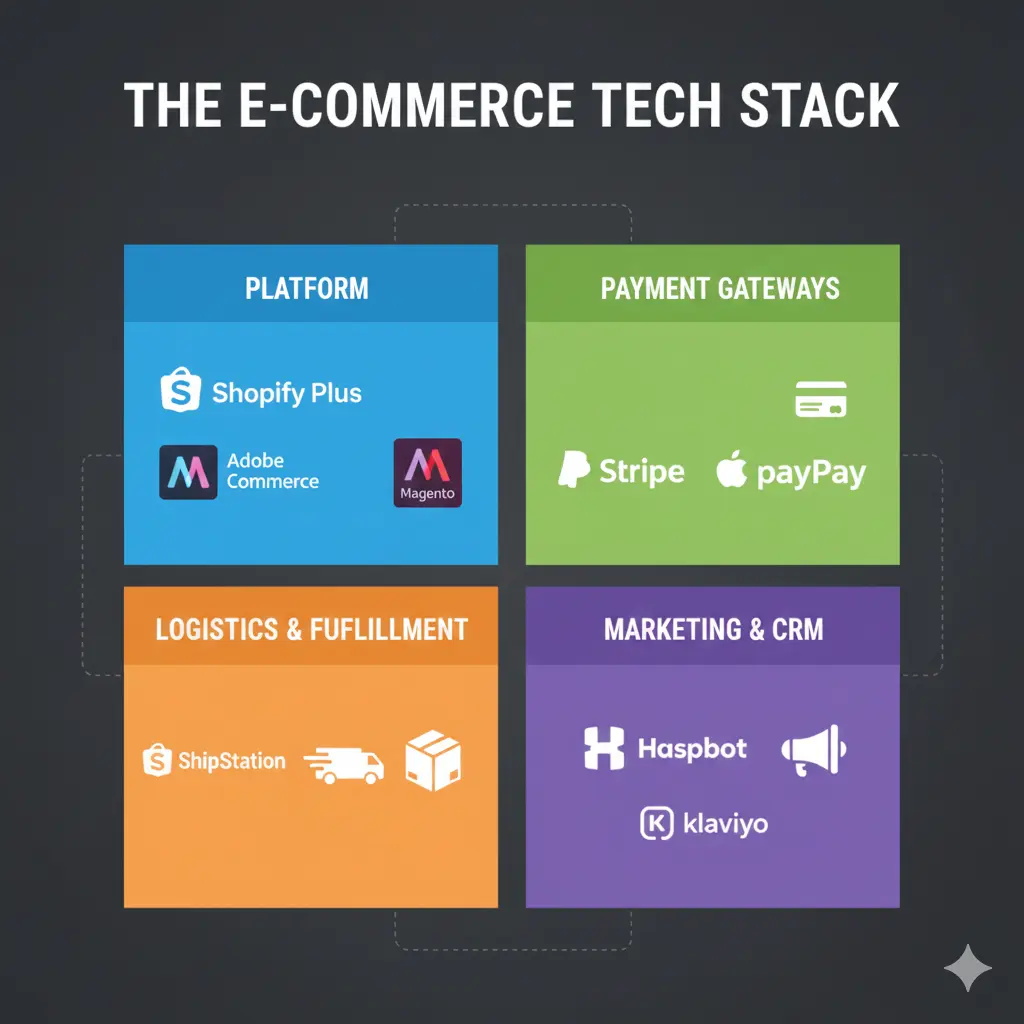
Scalability: For high-growth brands, we often recommend robust ecosystems like Shopify Plus or Adobe Commerce (formerly Magento), which can handle thousands of SKUs and international currency conversion without crashing.
-
Customization: We build headless commerce solutions where the front-end design is decoupled from the back-end database, allowing for lightning-fast speeds and total creative freedom.
2. Security and Trust Signals
In an era of increasing cyber threats, trust is your currency. If a customer sees a “Not Secure” warning, they will leave instantly.
-
Compliance: We ensure every e-commerce build meets strict PCI Security Standards to protect customer credit card data.
-
Trust Badges: Strategic placement of trust seals and transparent return policies (often integrated with logistics partners like ShipStation) reduces anxiety at the checkout page.
3. Mobile-First UX/UI
With over 70% of e-commerce traffic in the Tri-State area coming from mobile devices, “responsive” is not enough. We design for the thumb zone. This means ensuring that “Add to Cart” buttons, product variants, and payment gateways like Stripe or Apple Pay operate flawlessly on a smartphone screen.
The Manhattan Web Design Advantage
Why do leading NYC brands choose Manhattan Web Design over other agencies? Because we are not just designers; we are e-commerce strategists.
We Understand Local Logistics
Unlike remote agencies, we understand the specific needs of NYC operations, from integrating with local courier services for “same-day Manhattan delivery” to handling complex sales tax nexus rules for businesses operating out of the five boroughs. Resources like NYC Small Business Services highlight how critical local compliance is for longevity, and we bake this awareness into our development process.
SEO-Driven Product Descriptions
A pretty product page that no one can find is useless. We structure your site’s hierarchy to dominate Google Shopping and organic search. We utilize structured data (Schema markup) to ensure your products appear with star ratings and pricing directly in Google search results, following the best practices outlined in Google’s Search Essentials.
Red Flags: Avoiding the “Cheap Build” Trap
Many businesses are tempted by “fast and cheap” e-commerce offers. In the NYC market, this is fatal. Be wary of firms that:
-
Ignore Speed Optimization: If they don’t discuss Core Web Vitals or test your site on Google PageSpeed Insights, they are setting you up for failure.
-
Use Bloated Templates: Heavy, pre-made themes often contain “spaghetti code” that slows down your site and hurts your SEO rankings.
-
Lack Post-Launch Support: E-commerce sites require constant updates. A firm that disappears after launch leaves you vulnerable to security breaches and plugin failures.
Conclusion: Build Your Digital Flagship
Your website is likely the most profitable real estate your business owns. It never sleeps, it never takes a sick day, and it can serve thousands of customers simultaneously. Don’t trust it to a generalist.
Partner with a Manhattan web design firm that specializes in the mechanics of online sales. At Manhattan Web Design, we combine the grit of New York business with world-class technical engineering to build stores that convert.
Integrating a Frequently Asked Questions (FAQ) section is a high-value strategy for both user experience and SEO. It allows you to address common buyer hesitations while capturing “long-tail” search queries from users asking specific questions on Google.
Frequently Asked Questions: Manhattan E-Commerce Web Design
1. How long does it take to launch a custom e-commerce site?
For a professional, custom-built e-commerce platform in the Manhattan market, the typical timeline is 8 to 16 weeks. This includes discovery, wireframing, custom UI/UX design, development, and rigorous QA testing. Smaller Shopify builds may launch faster, while enterprise-level Adobe Commerce (Magento) projects with complex ERP integrations can take 6 months or more.
2. Which e-commerce platform is best for my NYC business?
There is no “perfect” platform, only the right one for your specific goals.
-
Shopify Plus is the gold standard for high-growth retail brands needing speed and reliability.
-
WooCommerce offers maximum flexibility for businesses already running on WordPress.
-
BigCommerce is excellent for B2B brands with complex wholesale pricing needs. A specialized Manhattan web design firm will audit your inventory and sales volume before making a recommendation.
3. Will my e-commerce site be optimized for Google and AI search?
Yes. Every reputable NYC agency must follow Google’s Search Essentials. This includes implementing Schema Markup (so your product prices and star ratings show up in search results), optimizing for Core Web Vitals, and ensuring your site is fully crawlable by both traditional search engines and new AI-driven generative engines.
4. How do you handle website security and PCI compliance?
Security is our top priority. We implement 256-bit SSL encryption and ensure your site adheres to PCI Security Standards. By using secure payment gateways like Stripe or PayPal, we ensure that sensitive credit card data never touches your server, significantly reducing your liability and protecting your customers.
5. Do I own my website and data after the project is finished?
At Manhattan Web Design, our policy is clear: You own 100% of your site. This includes the custom code, design assets, database, and domain. Beware of agencies that use proprietary “in-house” CMS platforms that effectively hold your business hostage; we build on open or transferable platforms so you are never “locked in.”
6. Can you integrate my website with my existing POS or ERP system?
Absolutely. Modern e-commerce is about data synchronization. We have extensive experience connecting web storefronts to systems like NetSuite, QuickBooks, and various Point-of-Sale (POS) systems used by Manhattan brick-and-mortar retailers to ensure your inventory is always accurate across all channels.
7. What happens if my site goes down or needs an update?
E-commerce is a 24/7 business. Most professional firms offer ongoing maintenance and support packages. This includes regular security patches, plugin updates, and performance monitoring to ensure you never miss a sale due to technical downtime.
Ready to scale your online revenue? Contact Manhattan Web Design today for a comprehensive e-commerce audit and strategy session.